 En


Timing Belt Tooth Profiles Explained: HTD, GT and T5 Practical Selection Guide
Start With the Tooth, Not the Belt Number
A maintenance engineer holds two timing belts. One is marked HTD 5M, the other T5. Both use a 5 mm pitch, so the teeth are spaced at the same interval. On a crowded conveyor drive, they can look close enough to be treated as near-equivalents. Then the replacement belt runs hot, climbs the pulley flange, or wears a narrow band into the tooth surface within a few weeks. The pitch was right; the tooth profile was wrong.
The practical answer is simple: HTD, GT and T5 are different tooth systems, not three names for the same belt. A matching pitch tells you the distance between tooth centers. It does not tell you whether the tooth flank, root depth, clearance and pulley groove will work together. For a reliable replacement or a new drive design, confirm three things before ordering: the tooth profile, the pitch, and the pulley tooth form.
This guide compares HTD, GT and T5 in the terms that matter on the shop floor and in the design office: load behavior, backlash, pulley compatibility, noise, wear pattern and procurement risk. It focuses on industrial rubber timing belts, because that is where many profile mix-ups begin and where a small selection error becomes a repeated downtime cost.
Useful rule: if the old belt and the new belt share a pitch but have different tooth shapes, stop. Do not force the belt onto the pulley to “see if it works.” A short test run can polish the wrong contact pattern into both parts and hide the real mismatch until production load arrives.
The Three Profiles at a Glance
HTD is the rounded, general-purpose workhorse. GT is a modified curvilinear family developed for more precise meshing and lower backlash when matched to the correct pulley. T5 is a metric trapezoidal profile, widely used in compact, light-duty drives where cost and availability matter. The table below is a starting point for sizing conversations, not a substitute for pulley drawings and duty-cycle review.
| Profile | Common pitch options | Tooth form | Typical strength band | Backlash behavior | Common fit |
|---|---|---|---|---|---|
| HTD | 3M, 5M, 8M, 14M | Rounded curvilinear | Moderate to high | Moderate; grows with wear and poor tension | General industrial drives, conveyors, mixers, pumps |
| GT | 2mm, 3mm, 5mm, 8mm | Modified curvilinear, deeper engagement | High in compact widths | Low when pulley and belt are a matched pair | Positioning axes, compact precision drives, automation |
| T5 | 5mm | Trapezoidal | Light to moderate | Moderate; sensitive to pulley wear and alignment | Small conveyors, light machinery, metric replacement drives |
One number is not enough to describe a profile. HTD 5M and T5 both sit at 5 mm pitch, but the HTD tooth is rounded and the T5 tooth is trapezoidal. GT 5mm also uses a 5 mm pitch, yet its flank shape and depth are different again. The pulley groove must match the belt family, not only the pitch number.
HTD: The Workhorse Round-Tooth Profile
HTD stands for High Torque Drive. In practice, it is a rounded curvilinear profile that spreads contact across the tooth flank rather than concentrating it at a sharp corner. That rounded geometry is forgiving in general industrial drives, especially where the load is not perfectly steady and where a small amount of misalignment is hard to eliminate.
HTD is common in 3M, 5M, 8M and 14M pitches. The larger pitches carry more torque per unit width, but they also need larger pulleys and more space. A 14M belt is not automatically “better” than an 8M belt. If the pulley diameter is too small, the belt tooth may not engage smoothly, and the cord may see a tighter bend than the application should allow. The correct choice balances pitch, width, pulley size and center distance.
Where HTD earns its place
- Conveyor drives with moderate shock loads and less-than-perfect frame stiffness.
- Pumps, fans and general machinery where standard pulleys are readily available.
- Retrofit work where the existing pulley is already an HTD form and the goal is to restore, not redesign.
- Drives that need a practical balance between torque capacity, noise and cost.
Where HTD needs caution
HTD is often described as a high-torque profile, but torque capacity still depends on belt width, tensile cord, rubber compound, pulley diameter and tension. A narrow HTD belt can fail sooner than a wider T5 belt in a light-duty application if the width was chosen only by profile name. HTD also has more backlash than a matched GT system in precise positioning work, especially after pulley wear develops.
Inspection matters. Look for a polished contact band on the tooth flank, root cracking, and belt dust around the pulley. A belt that runs loose will often show tooth wear at the root rather than across the full flank. A belt that runs too tight may show cord shadowing, edge fraying or pulley bearing heat.
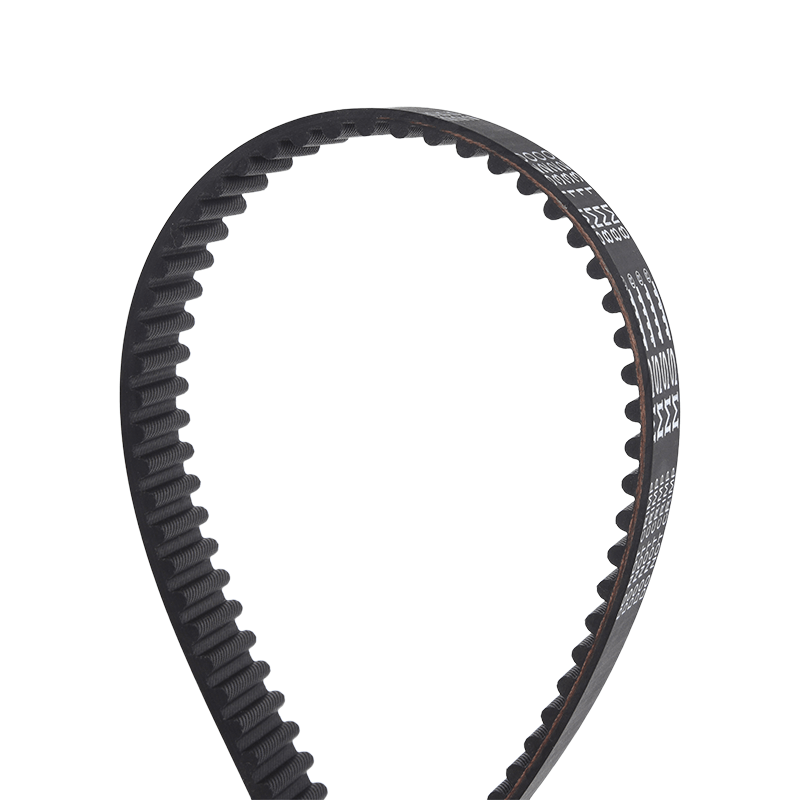
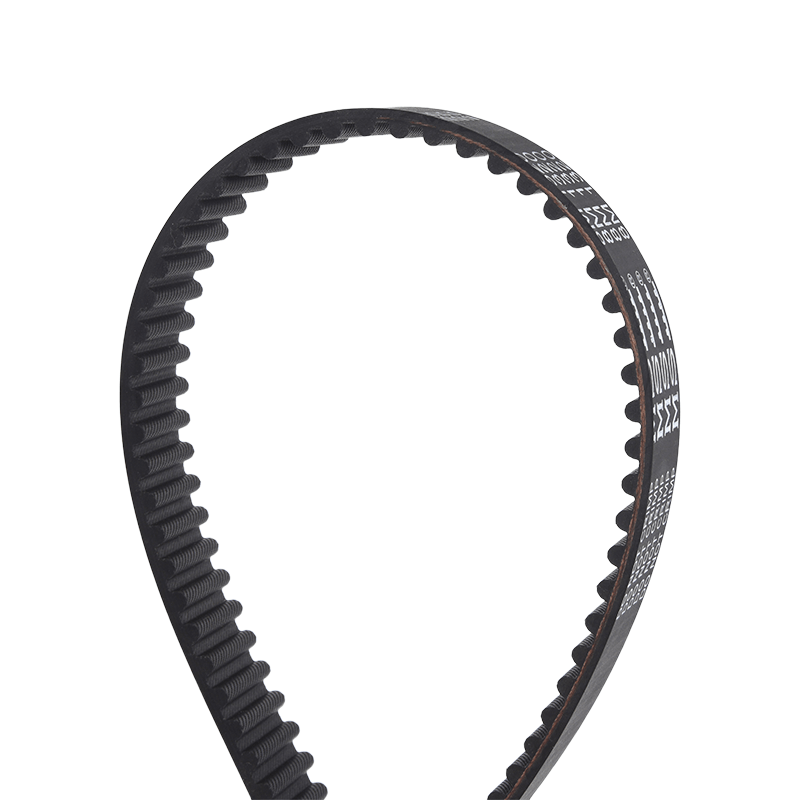 Arc Tooth Industrial Rubber Synchronous BeltsCurvilinear-tooth timing belts for smoother, quieter engagement and precise positioning; worth reviewing for compact automation and linear motion drives.View Product →
GT: Improved Meshing for Precision Drives
GT profiles use a modified curvilinear tooth shape with deeper engagement and a flank designed to reduce unwanted movement between belt and pulley. When the belt and pulley are a correct matched pair, GT can offer lower backlash and more consistent positioning than a general HTD drive. That is why GT appears in compact automation, linear motion, small spindle drives and equipment where repeatable position matters as much as raw torque.
The gain does not come from the belt alone. GT performance depends on the pulley tooth form, pulley runout, center distance accuracy and tension. A GT belt on an HTD pulley is not a precision upgrade; it is a mismatch. The belt may sit high in the groove, contact only part of the flank, or wear quickly at the tooth tip. In some cases it will run quietly long enough to pass a short trial, then lose position under reversing loads.
What GT changes in a drive
- Deeper tooth engagement can improve load sharing across the tooth flank.
- Lower backlash is possible when the pulley is made to the same profile family and tolerance band.
- Compact widths can transmit useful torque in small pulley packages.
- Positioning behavior can be more repeatable when alignment and tension are controlled.
GT is not always the right answer. In a dirty, shock-loaded conveyor with a large pulley and generous space, a well-sized HTD belt may be more tolerant and easier to source. In a high-precision axis, GT may be the better starting point, but only if the pulleys, idlers and frame rigidity support precision. For a closer look at how HTD and GT meshing differ in practice, see this HTD and GT profile comparison.
T5: Metric Pitch for Compact Light-Duty Drives
T5 is a 5 mm pitch metric profile with a trapezoidal tooth. It is common in small conveyors, packaging modules, laboratory equipment, light automation and replacement drives built around metric dimensions. The trapezoidal shape is simple and well understood, and T5 belts are available in many lengths, including open-ended and joined versions for specific layouts.
The strength of T5 is practicality. It fits small pulleys, keeps the drive compact, and is easy to specify when the machine was designed around a 5 mm metric pitch. The limitation is also practical: T5 is not a heavy-torque profile. It can handle light to moderate loads when the width, cord and pulley diameter are correctly chosen, but it should not be treated as a drop-in upgrade for a wider HTD or GT drive.
Common T5 selection mistakes
- Using T5 because the pitch is 5 mm while ignoring the old belt’s tooth shape.
- Increasing load without increasing belt width or pulley diameter.
- Running a T5 belt on a worn pulley with rounded tooth tips and expecting the new belt to restore accuracy.
- Using an open-ended T5 belt in a drive that needs a closed-loop belt and controlled length tolerance.
T5 inspection is usually straightforward. Wear appears as a polished, widened tooth contact area, frayed edges or a belt that sits lower in the groove. If the pulley teeth are hooked or polished to a sharp edge, replacing only the belt will shorten the new belt’s life. Check pulley tooth width and groove depth before blaming the belt compound.
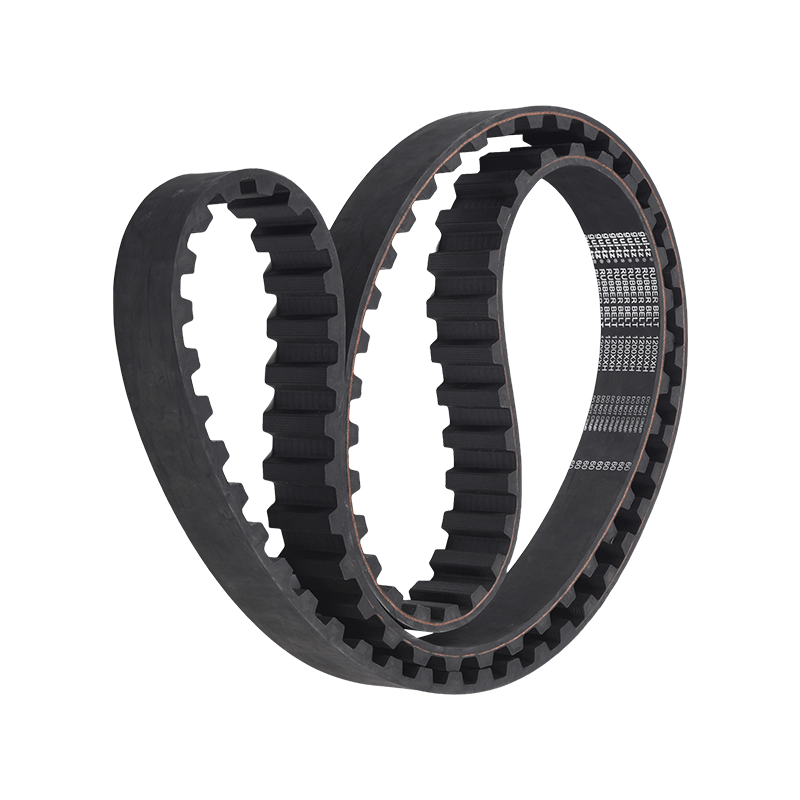 T Type Industrial Rubber Synchronous BeltsChloroprene rubber, fiberglass cord and nylon-cloth T-profile belts; useful when checking T5 pitch, tooth wear and pulley fit.View Product →
Pitch, Tooth Depth and Backlash: What Actually Changes
Pitch is the distance from one tooth center to the next. It is the easiest dimension to measure, which is why it often becomes the only dimension people check. Tooth depth, flank angle, root radius and clearance determine how the belt sits in the pulley. Backlash is the small movement between belt and pulley when the drive reverses or when torque changes direction. A profile with deeper engagement and tighter pulley control can reduce that movement, but it cannot remove compliance in the belt, frame or tensioner.
Consider a small positioning axis. If the belt is loose, the carriage may move a little before the belt tooth loads the pulley flank. If the pulley is worn, the belt may sit deeper and the effective pitch diameter can shift. If the frame flexes, the belt tension changes under load. HTD, GT and T5 respond differently to these conditions, but none of them can compensate for a weak structure or a worn pulley.
The bars are a relative planning aid for equal width and similar pulley size. They are not catalog torque ratings. Actual capacity depends on belt construction, cord, width, pulley diameter, speed, tension and duty cycle.
The practical lesson is to ask for the full profile description, not just “5 mm pitch.” A useful belt specification includes the profile family, pitch, width, tooth count or length, cord type, rubber compound and pulley drawing reference. If the application reverses direction, state the acceptable backlash. If the drive runs at high speed, state the pulley runout limit. If the environment is oily or dusty, state that before the compound is chosen.
Pulley Geometry Is Half the System
A timing belt drive is a matched system. The pulley tooth form, pitch diameter, groove depth, flange height and runout all influence how the belt enters and leaves the mesh. Two pulleys with the same tooth count can behave differently if one has a worn groove profile and the other holds its original tolerance. That is why a new belt on an old pulley sometimes feels worse than the worn belt it replaced: the old belt had adapted to the worn groove, while the new belt has to bridge it.
Pulley alignment deserves more attention than it usually gets. Angular misalignment causes the belt to load one side of the tooth. Parallel misalignment causes belt walk and edge wear. Excessive runout creates a once-per-revolution tension change that can show up as noise, vibration or tooth cracking. These problems can appear with any profile, but they are easier to diagnose when the belt and pulley family are known and the contact pattern is inspected after a short run.
Pulley checks before fitting a new belt
- Confirm the pulley is the same profile family as the belt, not merely the same pitch.
- Inspect tooth flanks for hooks, steps, polishing and deep wear pockets.
- Check flange height and condition; a bent flange can guide the belt off the pulley.
- Measure pulley runout and shaft alignment when the drive is sensitive to vibration.
- Check that the belt sits at the intended depth in the groove, not high on the tooth tips.
For a complete drive, treat the pulley as a wear part with its own inspection interval. A belt replacement that ignores pulley wear often becomes a repeat replacement. A pulley replacement that ignores belt profile can create a new mismatch. The safer approach is to record both belt and pulley markings, keep a profile drawing, and replace worn pairs when the contact pattern shows that the original geometry is gone.
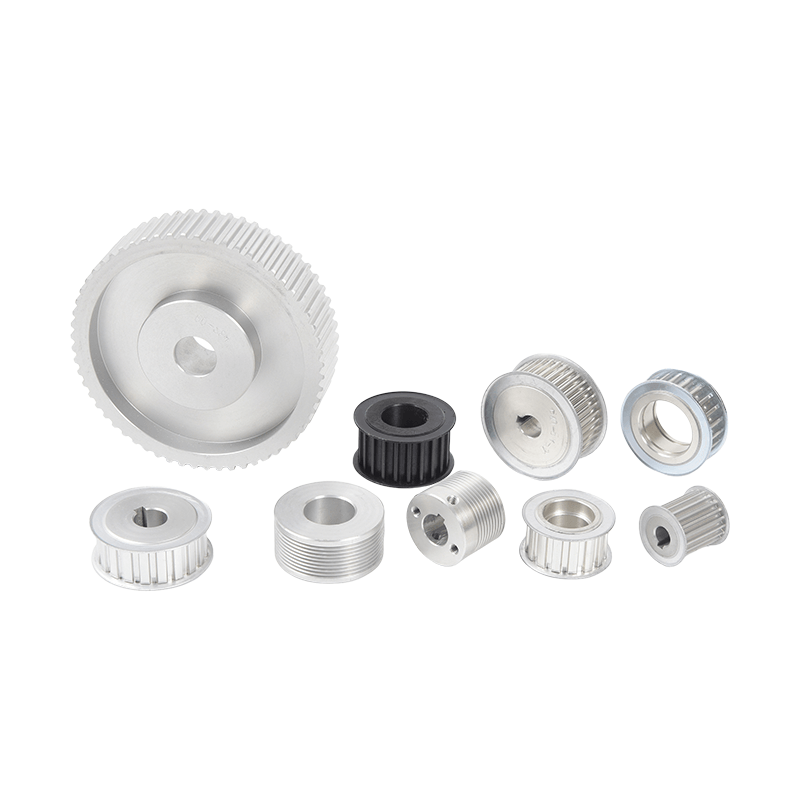
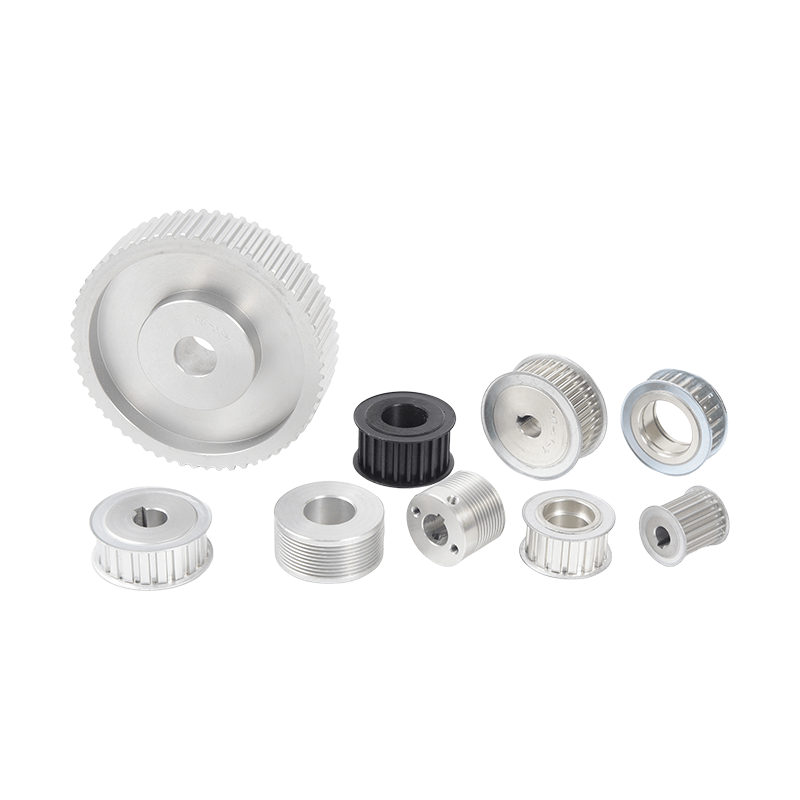 Synchronous Pulleys for Arc, Linear and T-Type BeltsMatched pulleys in carbon steel, cast iron, aluminum alloy or engineering plastics; check wear and profile compatibility before replacing a belt.View Product →
Selection Matrix: Match Profile to Load, Speed and Space
Start with the application signal, then choose the profile family to evaluate. Do not start with the belt that happens to be in stock. The matrix below is a screening tool for the first technical conversation; it should lead to a drawing check, a torque calculation and a sample trial if the drive is critical.
| Application signal | Profile to evaluate first | Why it fits | Check before ordering |
|---|---|---|---|
| Compact positioning axis with small pulleys | GT 2mm, 3mm or 5mm | Deeper meshing and low backlash when matched to the pulley | Pulley profile, runout, center distance, tension method |
| General industrial drive with moderate shock | HTD 5M or 8M | Rounded tooth form and broad industrial availability | Belt width, cord, pulley diameter, flange condition |
| Metric light conveyor or small module | T5 | 5 mm pitch and compact trapezoidal tooth | Load margin, pulley wear, length tolerance |
| High torque in a confined space | GT or wide HTD | Higher tooth engagement per unit width | Pulley tooth count, belt width, frame stiffness |
| High speed with noise limits | Fine-pitch GT or HTD | Smoother entry and more teeth in mesh | Pulley runout, alignment, belt tension |
For drives that carry shock loads or start under load, look beyond the profile name. The high-torque industrial timing belt construction, cord and tooth compound may matter more than the difference between two curvilinear profiles. For light-duty metric replacements, the opposite is often true: the machine may be limited by pulley size and space, so T5 remains the practical starting point.
Tolerances and Procurement Details That Prevent Rework
Most profile problems are not caused by a lack of theory. They are caused by incomplete ordering information. A belt may be described as “HTD 5M, 450 mm, 20 mm wide” while the pulley drawing is missing, the cord type is unspecified and the operating temperature is unknown. The order may arrive quickly, but the risk of rework is carried by the person who fits it.
A better procurement request includes the profile family and pitch, the tooth count or pitch length, the width, the pulley reference, the operating environment and the consequence of failure. If the drive is a safety-related or high-value asset, say so. If the belt runs in an oily area, state the oil exposure. If the machine reverses frequently, state the backlash limit. If the belt must run quietly, state the speed and noise target. These details help the supplier recommend a construction rather than only a size.
Procurement checklist
- Record the old belt marking, but verify it against the pulley tooth form.
- Measure pitch length and width with the belt relaxed and clean.
- Confirm the profile family: HTD, GT or T5, not only the pitch number.
- Ask for the pulley drawing or inspect the pulley tooth shape and wear.
- State load type, speed, duty cycle, ambient temperature and contamination.
- Agree on the tension method and the inspection interval before installation.
Be careful with “equivalent” replacements. A belt that is equivalent in length and width may not be equivalent in tooth geometry, cord stretch or compound hardness. In a low-speed conveyor, the difference may be acceptable. In a positioning axis or a high-torque drive, it may show up as lost motion, noise or short life. When the application is sensitive, request a profile drawing and compare it with the pulley before the first run.
Installation and Tension: Profile Cannot Fix a Bad Setup
A correct HTD, GT or T5 belt can fail early if it is installed with the wrong tension. Too loose, and the belt jumps teeth, wears the tooth root or generates heat at the pulley entry. Too tight, and the bearings, shafts and belt cord carry unnecessary load. The right tension is not a single number for all drives. It depends on belt width, pitch, span length, speed, pulley size and the tension method recommended for the drive.
Use a tension gauge or a documented deflection method. “Push it with a thumb” is not a specification. After tensioning, rotate the drive by hand and watch the belt enter the pulley. It should run centered, without climbing the flange or rubbing the guard. Listen for a regular tick or slap. A once-per-revolution noise often points to pulley runout or a damaged tooth, not the belt alone.
Installation points that matter
- Never pry a belt over a flange; release the tensioner or move the motor.
- Keep pulleys parallel and aligned before applying final tension.
- Check that the belt tooth profile matches the pulley groove along the full wrap.
- Run the drive unloaded for a short period, then recheck tension and belt tracking.
- Inspect the contact pattern after the first production run, not only at installation.
A profile change can change the tension behavior. GT belts may need a different preload than HTD belts of similar width, and T5 drives often use smaller pulleys where alignment is less forgiving. If the drive has been converted from one profile to another, recheck the entire system: pulley grooves, center distance, guard clearance, tensioner range and motor mount stiffness. A belt swap is not a complete redesign unless the rest of the drive is checked.
Failure Patterns by Profile
Failure patterns are useful diagnostic clues. They do not replace a root-cause inspection, but they help narrow the conversation. HTD belts often show root cracking or flank polishing when overloaded or run loose. GT belts may show tooth tip wear or ratcheting when the pulley is mismatched or the tension is low. T5 belts often show edge fraying, widened tooth contact or pulley groove wear in small drives. The same visible symptom can have different causes, so inspect the pulley, alignment and tension before changing the belt compound.
| Profile | Typical symptom | Likely area to inspect | Practical response |
|---|---|---|---|
| HTD | Root cracks, flank polish, belt dust | Tension, pulley wear, shock load, belt width | Recheck tension and load margin; inspect pulley groove |
| GT | Ratcheting, lost position, tooth tip wear | Pulley profile match, runout, tension, frame stiffness | Verify matched pulley, reduce runout, reset tension |
| T5 | Edge fray, widened contact, belt walk | Alignment, flange condition, pulley wear, load | Correct alignment, replace worn pulley, review width |
One trap is to change from T5 to HTD 5M or GT 5mm without changing the pulley. The pitch may match, but the groove will not. Another trap is to increase belt width to solve a misalignment problem. A wider belt can carry more load, but it can also increase edge load if the pulleys are not aligned. Fix the geometry first, then adjust the belt specification.
Applications Snapshot
Different applications put different demands on the tooth profile. The cards below show where each family is often considered, and what to check before a trial order. They are not fixed rules; they are practical starting points for a technical review.
Packaging conveyors
HTD 5M or 8M is often a sensible starting point for general conveyor drives with moderate shock. Check belt width, pulley flange condition and tension access. T5 may fit small module conveyors with light loads.
Positioning axes
GT 2mm, 3mm or 5mm is worth evaluating when backlash and repeatability matter. The pulley must be a matched profile, and frame stiffness must support the precision target.
Small metric modules
T5 suits compact drives built around 5 mm pitch. Confirm that the load is light to moderate and that the pulley teeth are not worn into a hooked shape.
Pumps and fans
HTD is common where standard pulleys and broad availability matter. Check starting torque and whether the drive runs continuously or with frequent stops.
Laboratory equipment
Fine-pitch GT or HTD can support smooth, compact drives. Noise and vibration often depend more on pulley runout and alignment than on the profile name alone.
Dusty or oily areas
Profile choice is only part of the decision. State the contamination to the belt supplier and review the rubber compound, guard design and inspection interval together.
FAQ
Can I replace a T5 belt with an HTD 5M belt because both have a 5 mm pitch?
No. The pitch is the same, but the tooth shape and pulley groove are different. An HTD 5M belt needs an HTD 5M pulley. Forcing it onto a T5 pulley can cause poor seating, rapid wear, noise or tooth jump. Replace with the same profile family unless the pulley is also changed as part of a reviewed conversion.
Is GT always better than HTD?
No. GT can offer lower backlash and more precise meshing when the pulley and drive are matched, but HTD is often more practical for general industrial drives with moderate shock and generous space. The right choice depends on load, precision target, pulley availability and the cost of downtime.
What does the “5M” in HTD 5M mean?
The “5” refers to a 5 mm pitch, and “M” indicates a metric pitch. It does not mean the belt is 5 mm wide or that it will fit every 5 mm pitch pulley. Width, tooth count and profile family must be specified separately.
How can I identify the profile if the belt marking is worn off?
Measure the pitch, inspect the tooth shape and compare the belt to the pulley groove. A rounded flank points toward a curvilinear family such as HTD or GT; a trapezoidal tooth points toward T5 or another T-profile. A profile drawing and a pulley inspection are more reliable than a visual guess alone.
How tight should a timing belt be?
Use the tension method recommended for the specific belt and drive. Tension depends on span length, belt width, pitch, speed and load. A deflection rule or tension gauge is better than thumb pressure. After the first run, recheck tension and belt tracking, because the belt may seat into the pulley.
When should I change the pulley as well as the belt?
Change or repair the pulley when the tooth flanks are hooked, stepped, deeply polished or worn below the intended groove depth. Also act if runout is excessive or the flange is bent. A new belt on a worn pulley often wears quickly and may not restore the original positioning accuracy.
Trial Order Planning Without Guesswork
Before placing a trial order, write down the drive facts in one page: profile family, pitch, belt width, tooth count or length, pulley tooth count, pulley drawing number, load type, speed, duty cycle, ambient conditions and the inspection interval. Add a photo of the old belt marking and a close-up of the pulley teeth. This record shortens the technical review and makes repeat orders much safer.
For a replacement, start with the existing profile and correct the cause of failure before changing the belt family. For a new design, compare at least two profile options and check the pulley diameter, belt width and tension range for each. If the drive is critical, ask for a sample belt and run it under representative load with a documented tension check. Measure the contact pattern after the trial, not only the belt length.
The most reliable choice is the one that matches the pulley, fits the available space, carries the real load and can be inspected in service. HTD, GT and T5 each have a clear place when the tooth profile, pitch and pulley are treated as one system rather than three separate part numbers.
Hotte produkter
-
 Se mere
-
 Se mere
Kilerem til industrien
-
 Se mere
T Type Industri Gummi Synkronbælte
-
 Se mere
Fortandet kilebælte
-
 Se mere
Fortykket tandrem
-
 Se mere
Åben tandrem
-
 Se mere
Kilerem til biler
-
 Se mere
Gummi fladt bælte
-
 Se mere
Ribbet bælte
-
 Se mere
Synkron remskive
-
 Se mere
Lysbuetand industrielt gummi synkronbælte
-
Se mere
Tandrem til biler

 Tel: +86-0574-62498188 62497298
 Fax: +86-0574-62497297
 E-mail:
 Add: No. 65, Middle Jinniu Road, Moushan Town, Yuyao City, Zhejiang-provinsen, Kina
Copyright © Ningbo GUL TZ Rubber Belt Co., Ltd. All rights reserved.

